Have your teeth started looking longer than they used to, or does cold water suddenly make the area near your gumline feel sensitive? Receding gums can develop gradually, which means many people do not notice the change until a tooth root becomes more visible or sensitivity appears. Although gum recession is common, it deserves attention because exposed roots can be more vulnerable to sensitivity, decay, and additional tissue loss.
At AB Dental and Oral Surgery, preventive dentistry in San Antonio includes evaluating the gums as well as the teeth. When gum recession is present, the first step is determining why the tissue has moved away from the tooth. Gum disease, aggressive brushing, tooth position, grinding, and other factors can all contribute, so treatment should address the cause rather than simply the appearance.
One of the most common questions patients ask is whether receding gums can grow back. In general, gum tissue that has been lost does not simply regenerate to its original position on its own. However, treatment can help control the cause, protect exposed roots, improve comfort, and reduce the risk of recession becoming more severe.
What Are Receding Gums?
Gum recession occurs when the margin of gum tissue surrounding a tooth moves away from its previous position. As a result, more of the tooth becomes visible and part of the root surface may be exposed.
The change may affect one tooth, several teeth, or many areas throughout the mouth. In addition, recession can develop slowly enough that the difference is difficult to notice without comparing dental examinations over time.
Because tooth roots do not have the same thick enamel covering as the crowns of teeth, exposed roots may become sensitive or more vulnerable to decay.
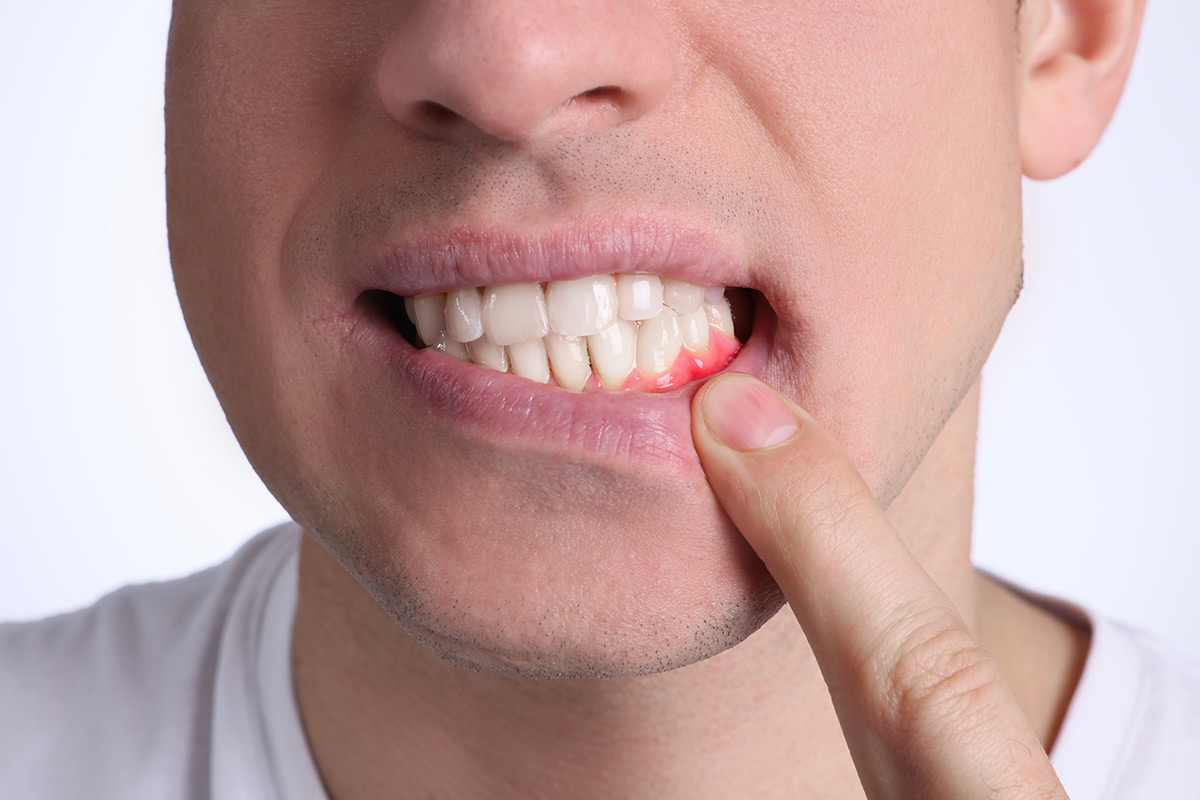
What Do Receding Gums Look Like?
A tooth affected by gum recession may appear longer than neighboring teeth. You may also notice a small notch near the gumline or a darker yellow area where the root has become exposed.
Other possible signs include:
- Increased sensitivity near the gumline
- A visible change in gum height
- Teeth that appear longer than before
- Small spaces developing between teeth near the gums
- Food collecting around exposed areas
- Bleeding or inflammation when gum disease is also present
- A noticeable groove near the root surface
However, not every uneven gumline represents active disease. Therefore, a dental examination is helpful for determining whether recession is progressing and what may be causing it.
What Causes Receding Gums?
There is no single cause of gum recession. In fact, several factors may occur at the same time.
Periodontal disease is one important cause. When inflammation damages the tissues and bone supporting teeth, the gumline may recede as the disease progresses.
Meanwhile, brushing with excessive force can repeatedly irritate the gum margin. A hard-bristled toothbrush or aggressive back-and-forth technique may contribute to recession, particularly in patients with thinner gum tissue.
Other factors can include tooth position, orthodontic movement, grinding and clenching, tobacco use, oral piercings, previous dental trauma, and naturally thin gum tissue.
Can Brushing Too Hard Cause Gum Recession?
Yes. More pressure does not necessarily make teeth cleaner.
Aggressive brushing can irritate the gums and contribute to wear near the gumline. Therefore, patients with recession are often advised to use a soft-bristled toothbrush and gentle technique.
An electric toothbrush with a pressure indicator may also help some patients recognize when they are pushing too hard.
However, you should not stop cleaning along the gumline because recession is present. Plaque control remains essential, especially when inflammation is contributing to the problem.
Can Gum Disease Cause Receding Gums?
Yes. Periodontal disease can damage the gums, periodontal ligament, and supporting bone around teeth.
As these supporting structures are affected, the gumline may change and periodontal pockets can become deeper. Bleeding, swelling, persistent bad breath, tooth mobility, and bone loss may occur along with recession.
If periodontal disease is contributing to receding gums, treatment needs to focus on controlling the disease. Simply covering an exposed root without managing active inflammation would not address the underlying problem.
Benefits of Treating Receding Gums
Treating receding gums is about more than improving the appearance of the gumline. Appropriate care can help protect exposed roots and reduce factors that may allow recession to progress.
- Protects exposed tooth roots: Root surfaces are more vulnerable than enamel-covered crowns and may need additional protection.
- May reduce sensitivity: Treatment can help manage discomfort caused by exposed root surfaces.
- Addresses underlying causes: Gum disease, aggressive brushing, grinding, and other contributing factors can be identified and managed.
- Helps reduce root decay risk: Exposed roots can develop cavities, so preventive care becomes especially important.
- Supports periodontal health: Treating inflammation and plaque buildup helps protect the tissues supporting the teeth.
- May improve gumline appearance: Certain procedures can cover exposed roots when clinically appropriate.
- Helps protect long-term tooth stability: Controlling periodontal disease and other causes of recession can support the structures around natural teeth.
Can Receding Gums Grow Back Naturally?
Gum tissue that has already been lost generally does not grow back to its original position simply through brushing, mouthwash, supplements, or home remedies.
However, swollen gums affected by inflammation can sometimes shrink after treatment. This can make the gumline look different, but it is not the same as regenerating tissue that was previously lost.
Therefore, advertisements claiming that a toothpaste or rinse can completely regrow lost gum tissue should be approached cautiously.
The more realistic goal is to identify why the recession occurred, prevent additional loss, protect the exposed root, and determine whether a periodontal procedure is appropriate.
How Are Receding Gums Treated?
Treatment depends on the cause and severity of the recession.
If brushing technique is contributing, changing toothbrush pressure and technique may help prevent further damage. Meanwhile, patients who grind their teeth may benefit from having their bite evaluated and discussing a custom nightguard when appropriate.
If gum disease is present, professional periodontal treatment may be necessary to reduce inflammation and bacterial buildup.
For exposed roots, fluoride or sensitivity products may be recommended. In some situations, tooth-colored restorative material can protect a worn or sensitive root surface.
More significant recession may require evaluation for periodontal procedures such as gum grafting.
What Is Gum Grafting?
Gum grafting is a periodontal procedure used in selected cases to add tissue to an area where the gumline has receded.
The goal may be to cover an exposed root, increase tissue thickness, improve protection, or reduce the risk of further recession.
Not every patient with receding gums needs surgery. The amount of recession, root exposure, tissue thickness, periodontal health, tooth position, and cosmetic concerns all influence whether grafting is appropriate.
If specialized periodontal treatment is needed, your dentist can explain the recommended evaluation or referral.
Can Receding Gums Cause Tooth Sensitivity?
Yes. Tooth roots contain microscopic pathways that can transmit temperature changes toward the nerve of the tooth. When gum tissue moves away and exposes these surfaces, cold drinks, air, sweets, or brushing may trigger sensitivity.
However, sensitivity can also result from cavities, cracks, grinding, enamel erosion, and damaged restorations. Therefore, persistent sensitivity should be examined rather than automatically blamed on recession.
Can Receding Gums Cause Cavities?
Gum recession does not directly create cavities, but exposed root surfaces can be more vulnerable to decay.
The root does not have the same protective enamel layer as the crown of the tooth. Consequently, plaque accumulation around an exposed root can become especially problematic.
Fluoride toothpaste, careful cleaning, professional preventive care, and treatment of dry mouth can become particularly important for patients with recession.
Can Receding Gums Make Teeth Loose?
Recession alone does not automatically make a tooth loose. However, when recession occurs because of advanced periodontal disease, the supporting bone around the tooth may also have been damaged.
As bone support decreases, a tooth may begin to move.
A loose permanent tooth deserves prompt evaluation because gum disease, trauma, infection, or bite problems can all contribute.
How Can You Prevent Receding Gums From Getting Worse?
Prevention depends on what is causing the recession, but several habits support healthier gums.
- Brush twice daily with a soft-bristled toothbrush.
- Use gentle pressure instead of scrubbing aggressively.
- Clean between your teeth every day.
- Keep regular professional dental examinations and cleanings.
- Have bleeding or swollen gums evaluated.
- Avoid tobacco and nicotine products.
- Discuss teeth grinding or clenching with your dentist.
- Use fluoride toothpaste to help protect exposed root surfaces.
- Do not ignore new sensitivity near the gumline.
- Follow periodontal maintenance recommendations if you have a history of gum disease.
Should You Use a Hard or Soft Toothbrush for Receding Gums?
A soft-bristled toothbrush is generally preferred because it can remove plaque effectively without requiring aggressive pressure.
The technique matters just as much as the toothbrush. Therefore, brushing harder is not the solution when plaque remains near the gumline.
Your dental team can demonstrate how to angle the toothbrush and clean gently around areas affected by recession.
When Should You See a Dentist About Receding Gums?
Schedule an evaluation if you notice that a tooth looks longer, the gumline is changing, root surfaces are visible, or sensitivity is developing.
You should also seek care if recession occurs with bleeding, swelling, persistent bad breath, pus, or loose teeth. These symptoms may indicate periodontal disease or another condition that requires treatment.
Earlier evaluation can help identify the cause before additional tissue or bone is affected.
Frequently Asked Questions About Receding Gums
Can receding gums grow back?
Lost gum tissue generally does not naturally grow back to its original position. However, treatment can help stop progression, protect exposed roots, and determine whether procedures such as gum grafting are appropriate.
Can brushing too hard cause receding gums?
Yes. Aggressive brushing can contribute to recession, especially in patients with thin gum tissue. A soft toothbrush and gentle technique are generally recommended.
Can gum disease cause gum recession?
Yes. Periodontal disease can damage the gum and bone supporting teeth, which may lead to recession and deeper periodontal pockets.
Do receding gums always require surgery?
No. Treatment depends on the cause and severity. Some patients need changes in home care or periodontal treatment, while others may benefit from gum grafting.
Can receding gums make teeth sensitive?
Yes. Exposed root surfaces can respond more strongly to cold, sweets, air, and brushing.
Can receding gums lead to tooth loss?
Recession caused by advanced periodontal disease can occur along with loss of supporting bone, which may eventually affect tooth stability. Early evaluation is important.
Protect Your Gum Health in San Antonio
Receding gums can develop from periodontal disease, aggressive brushing, grinding, tooth position, and other factors. Although lost gum tissue usually does not simply grow back, identifying the cause early can help protect exposed roots, reduce sensitivity, and limit further recession.
If you have noticed a changing gumline, exposed tooth roots, or new sensitivity, AB Dental and Oral Surgery can evaluate your teeth and gums and recommend appropriate care. Call Us Today at (210) 672-2787 or Contact Us to Book an Appointment at 5515 Tezel Rd STE 106, San Antonio, TX 78250.